
Oh Loss, You Antisocial?
On Bajan labels, quietly deferred dreams, and reclaiming the way we see ourselves.

On an island where you can drive from St. Lucy to St. Philip in 45 minutes, it’s easy to feel like every bush is a man. In these streets, someone is always watching.
It starts like this: Your neighbours wave and shout “Good Morning”. Then, in a process so immediate in the Bajan psyche… they analyze your every move. You’re not just you. You’re so-and-so’s son or daughter which can carry any manner of assumptions.
Your reaction is also a measure of identity. If you say something back? You’re polite. If you smile, you’re friendly. If you don’t, “you unmannerly” or worse.
You’re Antisocial.
In Barbados, labels mean everything. But you never get to choose them for yourself… other people do. Oldheads say young people love labels, but they’re more prone to giving them out than we are. Unmannerly, bewitched, anti, dotish, touched, unruly, no-brought-upsy, johnny, dumpsy. (N.B: These are all insults in Bajan parlance).
To many, being ‘antisocial’ refers to anyone who doesn’t fit the norm of socialization.
The USA has Homeowners Associations to police the neighborhood. Here, your fellow countrymen do it for free! Everyone is expected to be a compliant neighbour. Instead of home upkeep, they expect a perfect performance from you.
They subconsciously keep a long list of unwritten rules. You have to be full of manners, regardless of if they reciprocate. You must look them in the eye when speaking.
People would rather be perceived as friendly, kind, polite and respectful when they truthfully aren’t. They also hate when you don’t exactly act like them. If you’re a homebody, you’re ‘bewitched’. If you speak the Queen’s English, you think you’re better than them. They beg for conformity without even realizing. Is it any wonder why our young people feel freer abroad? Where social norms have eroded and the insular expectations are nonexistent?
How School Cliques Quietly Enforce Labels
One day, a teacher had a chat with my friend, Keisha.
In her class, there were three established friend groups. All with members who wouldn’t dare separate from their tribe. Naturally, that left her with no one to work with for group assignments. It wasn’t a mistake but rather a side-effect of her label.
Every day, Keisha would walk into class. Say “Good morning”, sit and take notes. She’d ask questions but never speak unless spoken to.
“You are so antisocial.” Ma’am told her. “You never talk to the other students.”
Keisha protested but Ma’am sent her on a mission. To survey her classmates, and ask a simple question. Was she antisocial?
The results were shocking. No matter where she went or who she asked, the answer stayed the same. Yes, she was.
“That’s not me.” Keisha confided. “I know it’s not.”
For Keisha, however, that social experiment proved nothing. She knew who she was. An intelligent girl who had an amazing group of friends whom she went out with constantly. Her perception at school didn’t faze her because she had a life outside of it.
I did not.
One Must Imagine Sixth-Form Sisyphus Happy.

Keisha shrugged off her label. Yet, I could not.
For me, realizing I had a label triggered a deep depression. Sixth form was meant to be a time of harvest; instead, it was an agonizing drought. I was exhausted. The first lap of this two-year marathon felt useless. I tried to be sociable. I spoke up more in class. Yet resisting the label of ‘antisocial’ felt futile.
I even tried my hand at joining clubs and after-school activities. The truth they don’t tell you? Unless you choose the ‘right’ ones, that are always so full it’s hard to find a seat… you remain invisible. To the general population, anyways.
The bottleneck was obvious.
Decisions happened in group chats the night before. Therefore if you weren’t an organizer or a beggar, you stood no chance. School mirrors society, after all. Only the designated ‘leaders’ get to command the crowd.
The system encourages them to play it safe, climbing a corporate ladder of club titles—being a friend to all, yet a friend to none.
Yet, there was one thing I missed that set them apart.
Self-confidence. These are often the only people willing to be seen and heard. They didn’t wait for permission, they took to the stage without being asked.
Yet, it took me years to realize they couldn’t believe in me because I didn’t believe in myself.
As result of lacking this social currency, I tried to gain recognition in solitary ways: an award-winning essay here, a play there. Yet nothing stuck. I sat in quiet envy of others who could leverage themselves into the spotlight; they seemed to have it all figured out. They didn’t need to beg for chances; opportunities seemed to find them.
Was something wrong with me? I always asked my best friend. Social graces seemed to be a mystery. I felt like I was walking on eggshells, constantly worried I’d offend someone. To make matters worse, I rationalized my stagnation as marginalization. My inability to break into these tight-knit circles felt like a rejection by society itself.
Parent-teacher meetings seemed to reaffirm this truth. Without fail, a teacher would comment that I “needed to talk more” in class… as if they didn’t just steamroll my comments for being unsatisfactory to the aims of that day’s discussion.
I was Sisyphus, pushing the boulder of antisociality uphill.
Unfortunately, it’s faster to get KFC delivery than to change your label here.
Or so I thought...
How I Learned to Stop Worrying & Love Taking Risks

The greatest stories ever told have a hero who must be bold. Or at least, that’s what the musicals I loved always promised.
In reality, I didn’t feel like a hero. I was just tired of being invisible.
It started with a rumor: the talent show needed emcees. I stepped in to help two guys I thought were the funny ones. They accepted, mostly because they were desperate.
I had no experience (beyond drama), no script, and little idea of what the acts were.
But I took to the stage on pure instinct. “Good afternoon, family!” I said, channeling my inner game show host. “Expect half an hour of the best of the school. I’m talking Broadway talent, dance, and other things I can’t think of right now. So stick around, clap loud, and let’s get these semi-finals started!”
Thirty seconds. That’s all it took to set the tone. I treated the audience like they already knew me, and they responded with enthusiasm.
The duo I joined? Frozen. Without a script, the guys I had looked to for help crumbled. While a committee member scolded them for doing nothing, one of them just pointed at me. “She’s the star.”
I’d read the room correctly. Energy mattered more than social capital. They had the role; I had the command.
The reaction was immediate. A teacher who I thought didn’t know I existed stopped me in the corridor, right in front of my friends. “You have these people in a tizzy! They keep asking, ‘Who is she?’
She continued, “I had to tell them you were here since First Form but that you’re quiet so of course they didn’t expect that from you. But you know how they say when you get a mic you transform? That’s you, girl.”
Multiple adults came to me with the same confession. They’d filed me as ‘quiet’ and stopped perceiving anything else. Suddenly, I hadn’t just spoken onstage; I had materialized. Now, they said they were looking at a stranger.
A Complete Unknown
On the day of the finals, I went from Clark Kent to Superman. A committee member called on me to co-host, and I took charge without a script once again. This time, it was a spectacle.
What makes theatre exhilarating is its uncertainty. Music malfunctions, lights get unplugged, and mics stop working. Working around these limitations is what makes it a sport in and of itself. As a host, nothing matters more than keeping the show running.
But often, the way we are taught to speak ignores this. We are told to “command” attention, but we forget that an audience is made of people first, listeners second. Engagement goes both ways. You cannot demand their eyes; you have to earn them.
I learnt this firsthand during the judges’ deliberation. I was left onstage for ten minutes to improvise—turning a painful technical delay into a performance. I started singing Rihanna and the audience, followed. It was like magic.
In the end, that connection is what helped me stand out. The story it created—a complete unknown taking a show by force—generated a buzz that safe credibility never could.
Even the guest judges took notice. That night, Quon who was fresh off his hit ‘Bartender’, pulled me aside and told me I should pursue emceeing. The following week, the principal herself hugged me and said I “saved the show.”
People call it ‘The X-Factor’. I learnt that I had it.
Outgrowing Our Labels
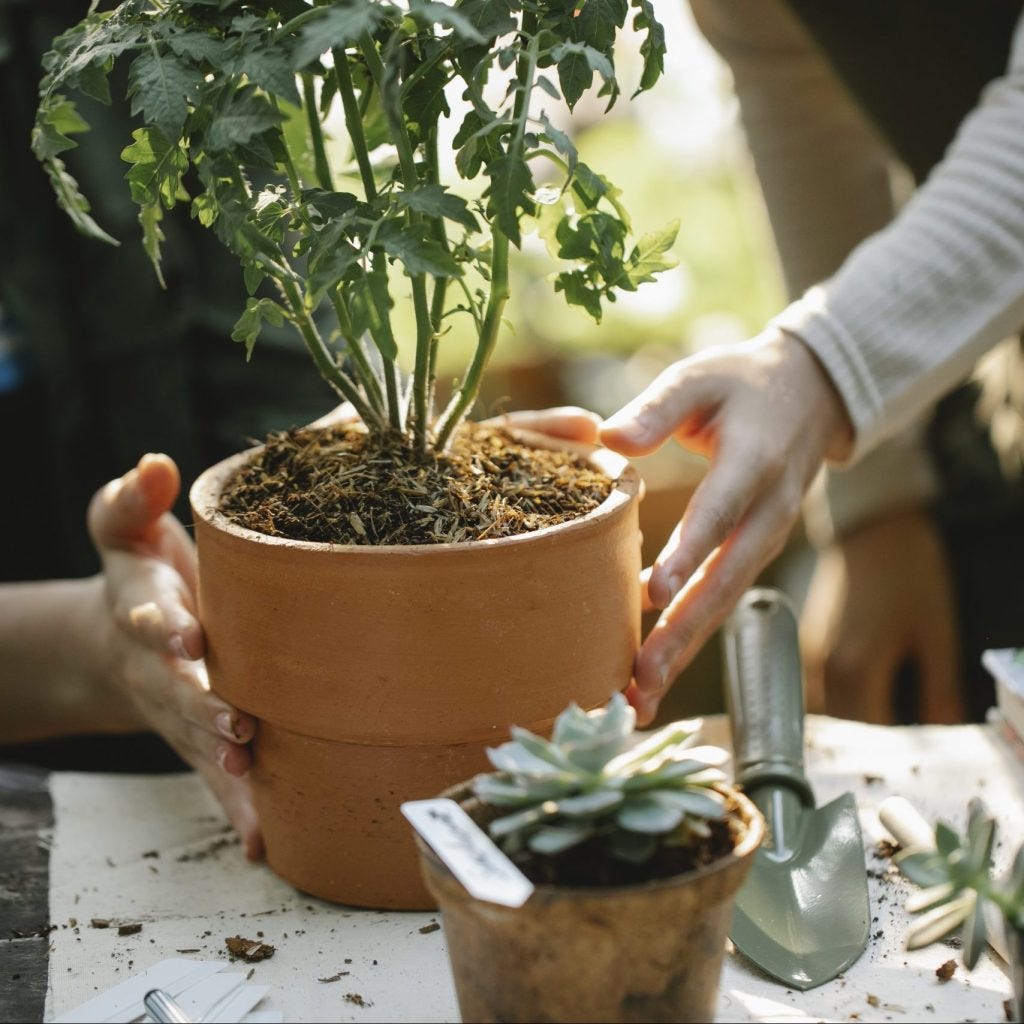
They say a plant can only grow as big as the pot it’s inside.
In life, the pot is our label. If we let others dictate our size, we can never blossom into our most verdant selves. For our own sakes, we must insist our pot is not big enough. That was the risk I took when I walked onto that stage.
A teacher eventually started playfully yelling at me in class, demanding I ‘be the girl they saw on stage.’ Their shock didn’t reveal a sudden development of my skills; it revealed their failure to recognize competence that was there all along.
They labeled me as ‘antisocial,’ they never saw my potential. So, I started to believe it.
That is, until I picked up the mic and forced them to look.